
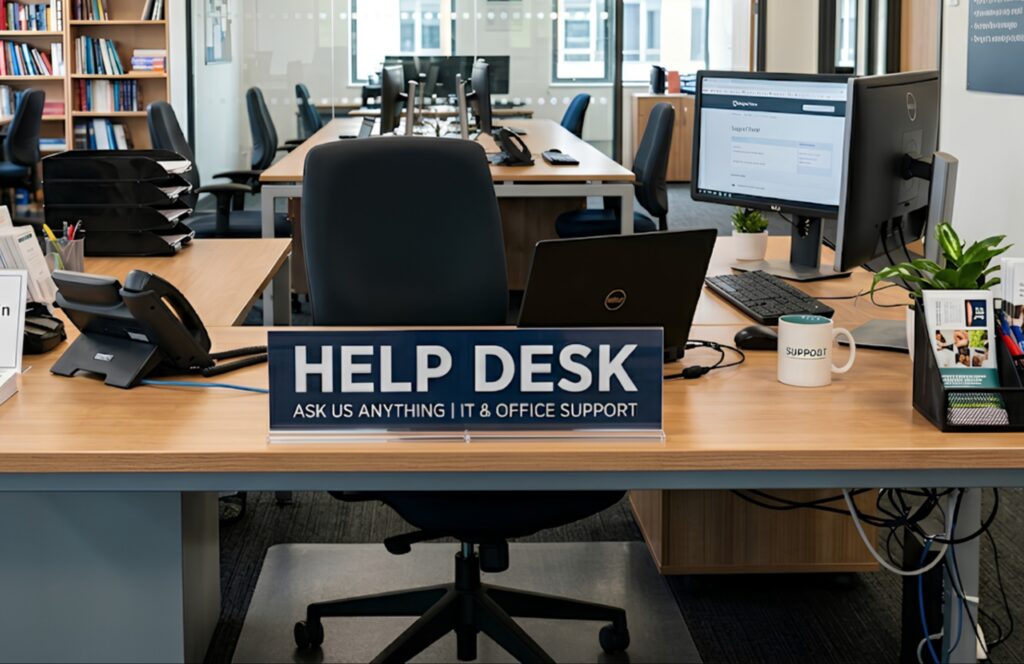
The Overlooked Risks of a Disconnected Help Desk and the Value of a True IT Partner
Four out of five businesses report experiencing at least one cyberattack in the past year, highlighting a pervasive threat landscape that demands more than just reactive support for IT challenges. Many Canadian small and mid-sized businesses, however, continue to rely on generic help desk services that offer generalized support without a deep understanding of their unique operational needs, industry context, or strategic goals. This approach, while seemingly cost-effective on the surface, often masks significant inefficiencies and overlooked risks that can undermine security, hinder productivity, and impede long-term growth.
The Pitfalls of Disconnected IT Support
The reliance on a disconnected support model can lead to a cascade of problems, starting with prolonged issue resolution. When a help desk technician lacks familiarity with a business’s specific software configurations, network architecture, or user roles, troubleshooting becomes a series of generic attempts rather than targeted solutions. Each interaction may involve explaining the same context repeatedly, leading to frustrating delays and increased downtime for employees. This not only saps productivity but also diverts valuable internal resources that could be focused on core business activities.
One of our financial services clients, a team of 45 wealth advisors, came to TruPoint after experiencing a frustrating month of remote-work disruptions. Every time an advisor logged in from home, a new network or application conflict arose. Their legacy provider treated each incident as an isolated “break-fix” ticket, forcing employees to repeat their infrastructure details to a different help desk technician every day while billable hours ticked away. When they switched to TruPoint, we broke that cycle. By pairing them with a dedicated Technical Account Manager who understood their operational needs, we migrated their team to TruWorkspace™. This provided their advisors with a secure, high-performance cloud desktop environment. Today, they securely access business-critical financial applications from any device, anywhere, backed by a platform engineered for strict data compliance and seamless continuity.
Security and Compliance Blind Spots
Beyond immediate fixes, a generic help desk often operates in isolation, separate from a business’s broader security and compliance objectives. They may resolve a ticket, but they rarely contribute to a proactive security posture or help align IT operations with regulatory requirements. For businesses in regulated sectors like financial services, where strict compliance with standards such as ISO 27001, SOC II, PIPEDA, and PCI DSS is critical, this lack of strategic alignment can expose them to significant vulnerabilities and potential penalties. Without an IT partner who understands the nuances of these regulations and the evidence required for cyber insurance qualification, businesses may find themselves inadequately protected and unprepared for audits.
The Zero Trust Imperative
Moreover, a disconnected support model often fails to integrate IT support with a robust security framework, such as Zero Trust. In today’s distributed work environments, where the traditional security perimeter has dissolved, every device, user, and application represents a potential entry point for threats. A help desk focused solely on break-fix issues cannot effectively implement or maintain an architecture that inherently trusts nothing and verifies everything. This leaves businesses vulnerable to sophisticated cyber threats, including ransomware and data breaches, which can have catastrophic financial and reputational consequences. For instance, 60% of breached small and mid-sized businesses close within six months, underscoring the severity of these risks.
The True Cost of Reactive IT
The cumulative effect of these inefficiencies and overlooked risks translates into hidden costs. Businesses may incur expenses from extended downtime, data recovery efforts, potential compliance fines, and even increased cyber insurance premiums or denied claims due to inadequate security controls. These costs far outweigh the perceived savings of a generic help desk, illustrating the false economy of a purely reactive IT support strategy.
The Strategic Advantage of a True IT Partner
The value of a true IT partner emerges clearly in contrast to this disconnected model. A dedicated IT partner, particularly one with a Canadian Service Desk and Security Operations Centre, offers personalized support that is deeply embedded within a client’s business ecosystem. This means technicians are not just solving problems; they are leveraging an intimate understanding of the client’s operations, industry context, and strategic goals to provide solutions that are not only effective but also aligned with long-term objectives.
Integrated Support and Security
Such a partnership fosters trust and ensures a cohesive approach to IT management, from day-to-day support to strategic security initiatives. A Canadian Service Desk means local support that understands the specific regulatory environment, such as the Personal Information Protection and Electronic Documents Act (PIPEDA), and aligns with Canadian business hours and cultural nuances. A Security Operations Centre provides continuous monitoring, threat detection, and rapid response capabilities, ensuring that security is not an afterthought but a constant priority. This integration of support and security operations is fundamental to building resilience against modern cyber threats.
Comprehensive Management and Canadian Data Sovereignty
Furthermore, a true IT partner acts as an extension of the client’s team, proactively contributing to their security and operational objectives. This encompasses managing critical services like Microsoft 365 and Teams, which have become central to modern workplaces, ensuring they are optimized and secured. It also involves comprehensive on-premise networking and hardware lifecycle support, providing a full-stack approach that covers all aspects of a business’s IT infrastructure, whether it’s on-premise, cloud-based, or hybrid.
The “we handle everything” value inherent in a fully managed IT service extends to critical aspects like data sovereignty. For Canadian businesses, storing data within Canadian data centres is increasingly important for compliance, privacy, and national security reasons. An IT partner offering a SOC II and ISO 27001 certified Canadian private cloud, with data centre locations in multiple Canadian provinces, ensures data residency and peace of mind. This commitment to Canadian infrastructure also enables the secure hosting of demanding workloads, including artificial intelligence applications, n8n workflow automation, and web and data hosting, all while adhering to local regulations.
Ultimately, partnering with a comprehensive managed services provider means gaining a trusted advisor who not only resolves immediate IT issues but also actively works to strengthen customer connections, unlock innovation, and protect the business securely and without compromise. This shifts IT from a reactive cost centre to a strategic enabler, providing the security controls, compliance proof, and cyber insurance qualification that are critical requirements for today’s security-minded businesses.
Key Takeaways and Next Steps
The distinction between a generic help desk and a true IT partner is profound. While a disconnected help desk offers superficial, reactive support, a dedicated IT partner provides integrated, proactive services deeply aligned with a business’s strategic objectives, security needs, and compliance requirements. For Canadian small and mid-sized businesses, this partnership offers the critical advantages of local expertise, data sovereignty, and a comprehensive approach to IT management that secures operations, enhances productivity, and provides peace of mind.
Businesses seeking to move beyond reactive IT support and embrace a strategic partnership model should evaluate providers who offer a full suite of managed IT services, including a dedicated Canadian Service Desk and Security Operations Centre, robust endpoint management, and secure cloud infrastructure designed with Zero Trust principles. Taking this step can transform IT from a source of frustration and risk into a powerful engine for secure growth and innovation.
Sources
Content Integrity
This article was generated with the assistance of AI and edited by a human team member.