

ISO 27001 in 2026: Essential Insights for Canadian Small and Mid-Sized Businesses
In an increasingly complex digital world, many businesses operate under the misconception that their cyber insurance will provide a dependable safety net should a breach occur. However, the reality is stark: a significant number of cyber insurance claims are now being denied. The financial implications for Canadian small and mid-sized businesses can be catastrophic, with some reports indicating that the average cost of a cybersecurity breach in Canada was $6.94 million in 2023. This escalating risk underscores the urgent need for robust information security practices, making the updated ISO 27001 standard a critical focus for 2026.
The International Organization for Standardization (ISO) 27001 standard, the globally recognized benchmark for information security management, underwent a significant update in October 2022. While the 2022 version has been available for some time, the full impact for businesses will be realized in 2026, as the transition period for organizations to adopt the new standard concluded on October 31, 2025. This means that this year, all organizations wishing to maintain their ISO 27001 certification must be fully compliant with the ISO/IEC 27001:2022 version. For Canadian small and mid-sized businesses, understanding these changes and adopting a proactive, continuous compliance approach is no longer optional; it’s essential for protecting data, ensuring business continuity, and navigating the increasingly stringent requirements of cyber insurance and regulatory bodies.
What is ISO 27001?
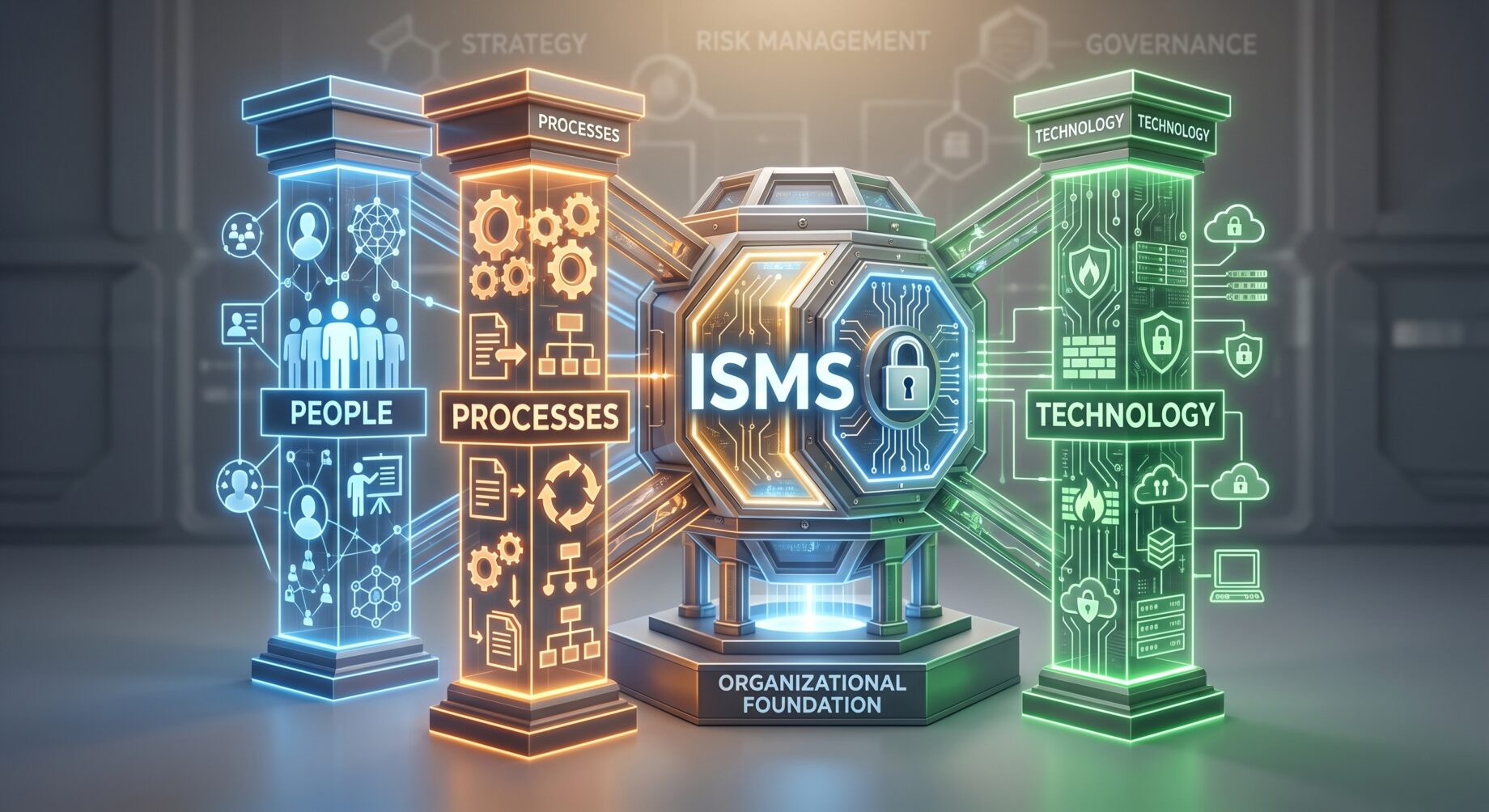
ISO 27001 provides a comprehensive framework for establishing, implementing, maintaining, and continually improving an Information Security Management System (ISMS). An ISMS is a systematic approach to managing sensitive company information so that it remains secure. It encompasses people, processes, and technology, helping organizations manage their information security risks effectively. By achieving ISO 27001 certification, businesses demonstrate a commitment to best practices in information security, building trust with customers and stakeholders alike. This certification helps to protect information assets from various threats, including physical incidents, employee negligence, system vulnerabilities, and cybercrime.
Key Changes to ISO 27001 in 2022 (and Their 2026 Implications)
The ISO/IEC 27001:2022 update, referencing the detailed controls in ISO/IEC 27002:2022, brought about several important refinements designed to address the evolving landscape of cyber threats and modern technological environments.
One of the most noticeable changes is the streamlining of the Annex A controls, which define the specific security measures an organization can implement. The number of controls was reduced from 114 to 93, with many existing controls merged, some renamed, and 11 entirely new controls introduced. These new controls reflect critical areas of modern information security, including:
- Threat intelligence: Gathering and analyzing information about potential threats to enhance proactive defense.
- Information security for the use of cloud services: Addressing the unique security challenges associated with cloud adoption.
- ICT readiness for business continuity: Ensuring that information and communication technology systems are resilient and can recover from disruptive events.
- Physical security monitoring: Enhancing oversight of physical access to sensitive areas.
- Configuration management: Maintaining secure configurations for systems and software.
- Deletion of information: Ensuring secure and complete disposal of data when no longer needed.
- Data masking: Techniques to obscure sensitive data while retaining its usability for testing or development.
- Data leakage prevention: Measures to stop sensitive information from leaving the organizational boundaries without authorization.
- Monitoring activities: Continuous monitoring to detect unusual activity and potential security incidents.
- Web filtering: Controlling access to malicious or inappropriate websites.
- Secure coding: Implementing secure development practices to minimize vulnerabilities in software.
Additionally, the controls are now organized into four themes: Organizational, People, Physical, and Technological, replacing the previous 14 domains. This re-categorization aims to improve clarity and applicability, making it easier for businesses to implement and manage their ISMS. The standard also places a greater emphasis on a risk-based approach and includes new attributes for controls, allowing for better categorization and prioritization.
For Canadian businesses, these updates in 2026 mean that simply maintaining an older certification is no longer sufficient. A full alignment with ISO 27001:2022 is required, necessitating a review and potential update of existing security processes, policies, and procedures.
Impact on Canadian Small and Mid-Sized Businesses
The updated ISO 27001 standard carries significant implications for Canadian small and mid-sized businesses, especially those in regulated sectors like financial services. Compliance is increasingly tied to market access and financial protection.
Firstly, cyber insurance eligibility and premiums are directly influenced by an organization’s security posture and demonstrable adherence to standards like ISO 27001. Insurers are intensifying their scrutiny, often denying claims due to preventable oversights such as missing multi-factor authentication (MFA). ISO 27001 certification can lower premiums by demonstrating robust risk management and a reduced likelihood of incidents. Without credible alignment to recognized security standards, businesses may face higher insurance requirements, delayed onboarding with partners, or even outright disqualification from certain opportunities.
Secondly, regulatory compliance with Canadian laws such as the Personal Information Protection and Electronic Documents Act (PIPEDA) is strengthened by ISO 27001. The standard’s emphasis on data protection aligns well with PIPEDA’s requirements for transparency and consent, and its controls provide robust safeguards for personal information. Achieving ISO 27001 helps organizations meet both international and national regulatory requirements, enhancing their credibility.
Thirdly, the shift in ISO 27001 reflects the current threat landscape, which includes sophisticated, AI-powered attacks and an increasing targeting of small and mid-sized enterprises (SMEs). Businesses that do not adapt to the updated standard and implement continuous, evidence-based security measures risk significant financial losses and reputational damage from breaches.
The Importance of Continuous Compliance
The notion of achieving compliance as a one-time audit or checkbox exercise is no longer viable. The dynamic nature of cyber threats and the continuous evolution of standards like ISO 27001 demand an always-on compliance approach. This means embedding security and compliance into the everyday operations of a business, rather than scrambling to prepare for an annual audit.
A continuous compliance strategy helps businesses:
- Mitigate risk proactively: By constantly monitoring and adapting security controls, organizations can identify and address vulnerabilities before they are exploited.
- Build an evidence trail: Robust documentation of ongoing security practices provides the necessary proof for auditors, regulators, and crucially, cyber insurance claims. As insurers increasingly scrutinize security practices after an incident, a continuous record of compliance is vital to avoid claim denials.
- Reduce the cost of a breach: Proactive security significantly lowers the likelihood and impact of a cyber incident, minimizing financial and reputational damage.
- Maintain regulatory adherence: Continuous compliance ensures ongoing alignment with regulations like PIPEDA, reducing the risk of penalties and legal issues.
For many Canadian small and mid-sized businesses, building and maintaining an internal team with the specialized expertise required for continuous ISO 27001 compliance can be cost-prohibitive. This is where managed services become invaluable. Partners specializing in compliance management can provide a Virtual Chief Information Security Officer (CISO) to offer strategic guidance, managed Information Security Management System (ISMS) software for streamlined operations, and round-the-clock Security Operations Centre (SOC), Extended Detection and Response (XDR), and Security Information and Event Management (SIEM) monitoring. This comprehensive approach ensures that businesses have the necessary expertise and tooling to achieve and maintain continuous compliance, transforming it from a burdensome task into a managed capability.
Strengthening Overall Security
Adopting the ISO 27001:2022 standard strengthens an organization’s overall cybersecurity posture and operational resilience. It drives the implementation of a robust framework that systematically identifies vulnerabilities, implements targeted security controls, and establishes continuous monitoring systems. This proactive stance helps to detect anomalies before breaches occur and ensures that businesses are prepared to respond effectively if an incident does happen.
Furthermore, integrating a security architecture built on modern principles, such as Zero Trust, aligns seamlessly with the ethos of ISO 27001:2022. Zero Trust ensures that every device, user, and application is verified before access is granted, regardless of their location, fundamentally enhancing security beyond a traditional perimeter-based approach. This foundational shift, combined with the detailed controls of ISO 27001, provides a powerful defense against today’s sophisticated cyber threats.
Summary of Key Takeaways and Next Steps
This year marks a critical juncture for Canadian small and mid-sized businesses concerning ISO 27001 certification. The updated ISO/IEC 27001:2022 standard, with its refined controls and renewed emphasis on dynamic risk management, is now the definitive benchmark for information security. Embracing these changes through a continuous compliance strategy is paramount for safeguarding sensitive information, securing favourable cyber insurance terms, meeting regulatory obligations, and ultimately, ensuring business resilience in an increasingly threatened digital landscape.
Businesses should proactively:
- Assess their current security posture: Understand where their existing information security management system aligns with, or deviates from, the ISO 27001:2022 standard.
- Review and update policies and procedures: Adapt internal documentation to reflect the new controls and structural changes of the 2022 version.
- Implement necessary technical controls: Prioritize the adoption of new controls, particularly those related to cloud security, threat intelligence, and continuous monitoring.
- Consider expert guidance: Partner with experienced information security and compliance providers who can offer the necessary expertise, tools, and managed services to navigate the transition and maintain continuous compliance.
Taking these steps will not only help businesses achieve and maintain ISO 27001 certification but will also fortify their defenses against evolving cyber threats, transforming compliance from a burden into a strategic asset.
Sources
-
Google Cloud (2024). Grounding AI: Harnessing the Power of Foundation Models.
-
Google Cloud (2024). Vertex AI Search: Overview and Key Capabilities.
-
Google Cloud (2024). Best Practices for Implementing RAG Systems.
-
Google Cloud (2024). Introduction to Enterprise Search with Vertex AI.
-
Google Cloud (2024). Managing Data Stores in Vertex AI Search.
-
Google Cloud (2024). Optimizing Retrieval Performance for LLMs.
-
Google Cloud (2024). Google Cloud Vertex AI Documentation: Data Ingestion.
-
Google Cloud (2024). Scaling AI Applications with Vertex Search.
-
Google Cloud (2024). Security and Privacy in Vertex AI Search.
-
Google Cloud (2024). Advanced Querying Techniques in Cloud Search.
-
Google Cloud (2024). Vertex AI Search: Multi-Modal Capabilities.
-
Google Cloud (2024). Customizing Search Results with Vertex AI.
-
Google Cloud (2024). Evaluating Search Quality in Vertex AI.
-
Google Cloud (2024). Vertex AI Search: API Reference and Integration.
-
Google Cloud (2024). Leveraging Metadata for Enhanced Retrieval.
-
Google Cloud (2024). Vertex AI Search: Understanding Semantic Search.
-
Google Cloud (2024). Data Privacy Controls in Vertex AI Search.
-
Google Cloud (2024). Vertex AI Search: Best Practices for Success.
Content Integrity
This article was generated with the assistance of AI and edited by a human team member.