

AI Is Moving to the Endpoint, Is Your IT Ready?
With 43% of cyberattacks targeting small businesses and 60% of breached SMBs closing within six months, the way organizations operate and secure their information is undergoing a profound transformation. Artificial intelligence (AI) is no longer confined to large, centralized data centres; it is increasingly moving to individual user devices, known as the endpoint. This shift is driven by the demand for real-time insights, reduced latency, enhanced privacy through local processing, and the ability to personalize user experiences without constant cloud communication. At the same time, traditional server rooms have given way to widespread use of Software as a Service (SaaS) applications, and collaborative platforms like Microsoft Teams often serve as the primary office environment for many organizations. This fundamental shift presents both significant opportunities for innovation and substantial challenges for security, demanding a thorough re-evaluation of existing IT infrastructure and security strategies for Canadian small and mid-sized businesses, particularly those in regulated sectors where compliance and data integrity are paramount.
The Impact of Decentralized IT and the Disappearing Security Perimeter
The integration of AI directly onto user devices means that computing power, once housed remotely, is now required locally. Employees need their devices to handle complex AI tasks efficiently, such as real-time language translation, advanced data analytics on local files, intelligent automation within applications, and enhanced video conferencing features. This local processing ensures native collaboration, allowing for smooth co-editing in documents and seamless application performance, where complex design software runs without lag. This decentralization of processing fundamentally alters the landscape for IT teams. Furthermore, with critical business applications residing in the cloud via SaaS and communication happening through platforms like Microsoft Teams; which serves as a central hub for file sharing, meetings, and project management; the traditional security perimeter that once protected on-premise servers has effectively dissolved. Employees now work from home, coffee shops, or client sites, often using personal devices or company-issued laptops outside the corporate network.
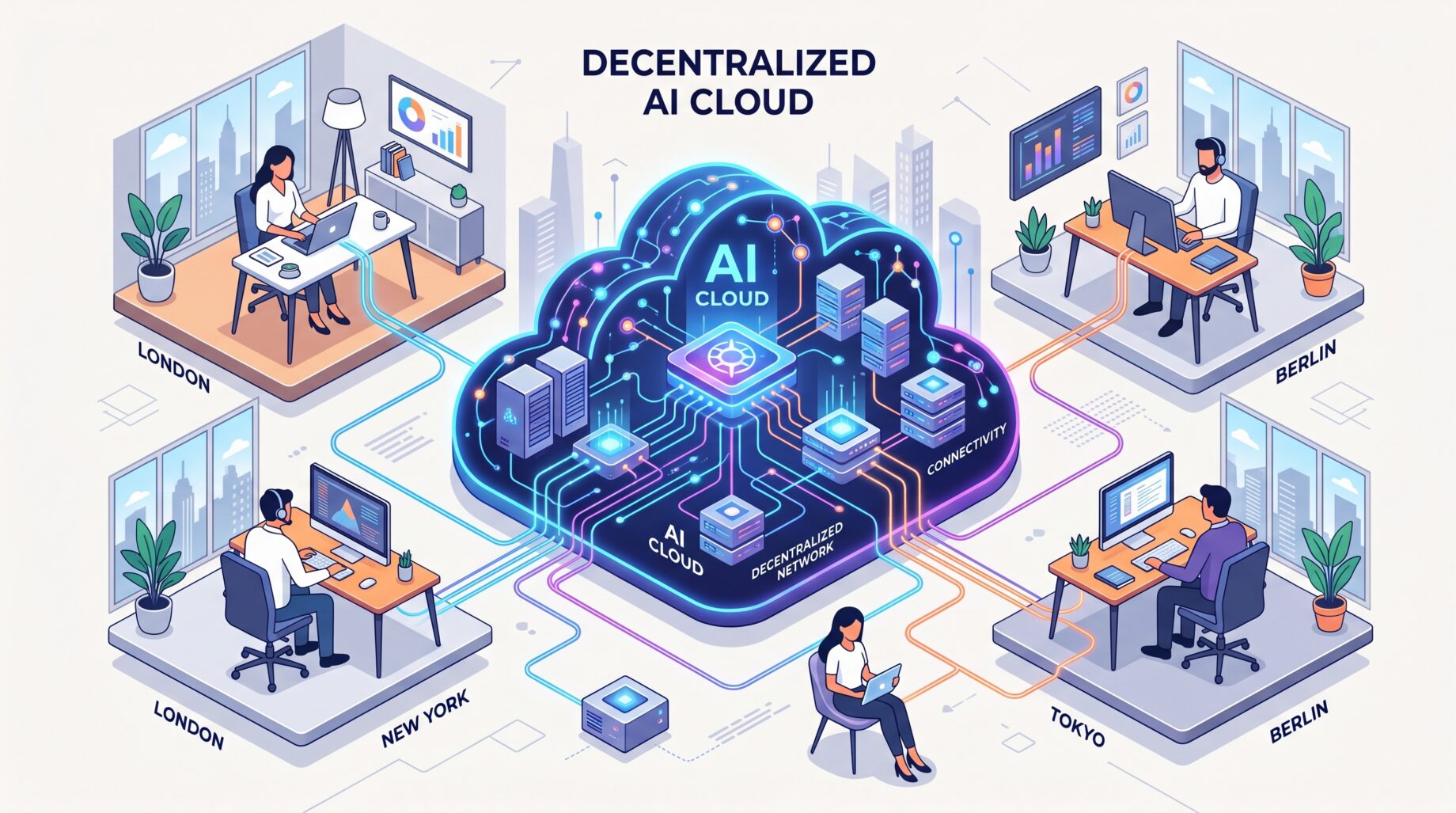
Data is accessed from various locations, on various devices, through various cloud services, meaning the edge is now everywhere a user or device connects. The old model of securing a network edge with firewalls and VPNs alone no longer accounts for where work truly happens or where valuable data now resides.
Why Traditional Security Fails: The Real Threats to SMBs
In this new reality, securing every device, every user, and every application, regardless of their physical location, becomes paramount. The threats are substantial and disproportionately affect small and mid-sized businesses. The statistic that 43% of cyberattacks target small businesses highlights their vulnerability; SMBs often have fewer dedicated IT security resources, making them attractive targets for opportunistic attackers or as stepping stones to larger partners in their supply chain. The grim reality that 60% of breached SMBs close within six months underscores the devastating impact of a successful attack, which extends beyond data loss to include operational downtime, reputational damage, legal fees, regulatory fines (such as those under PIPEDA in Canada), and the sheer cost of recovery. For financial services firms, a breach can irrevocably erode client trust. Moreover, the increasing scrutiny from cyber insurance providers means that nearly 74% of filed cyber insurance claims close without any payout made to the policyholder. This often stems from insufficient security controls, a failure to follow best practices, a lack of demonstrable compliance, or not meeting the insurer’s specific requirements. Protecting sensitive information, maintaining operational continuity, and ensuring insurability requires a modern approach to security that can adapt to a distributed IT environment.
Zero Trust: The Foundation for Modern Security
Zero Trust architecture is emerging as the necessary response to this evolving landscape. It operates on the principle that no user or device, whether inside or outside the network, should be trusted by default. Instead, every access request must be verified. This “never trust, always verify” model is implemented through several core tenets. First, strong identity verification goes beyond simple passwords, requiring multi-factor authentication (MFA) as a baseline, with passwordless authentication offering even stronger assurance. This ensures the user is who they claim to be. Second, device posture assessment checks the device’s health before granting access, verifying it is patched, has antivirus, and is encrypted, ensuring the device is secure. Third, least privilege access grants users and devices only the minimum permissions necessary for their specific task, limiting the blast radius if a compromise occurs. Fourth, micro-segmentation breaks down network access into small, isolated segments, preventing an attacker who breaches one part of the network from easily moving laterally to other critical systems. Finally, continuous monitoring and verification means trust is never granted permanently; every access request and session is continuously monitored for anomalous behaviour, with access revoked instantly if conditions change. This security model ensures that AI processing at the edge, cloud-based applications, and remote collaboration tools are all protected under a consistent and robust framework. It helps businesses leverage the benefits of AI and modern cloud tools securely, mitigating the risks associated with a dissolved security perimeter.
Preparing Your Business for AI at the Endpoint and a Zero Trust Future
To prepare for AI at the endpoint and the modern workplace, businesses must take proactive steps. Begin by assessing your current identity and access management protocols, ensuring every user’s identity is verified and that access to applications and data is granted only on a least-privilege basis. Beyond this, conduct a comprehensive IT audit to understand all devices, applications, and data flows, identifying where sensitive data is stored and who has access. Implement robust endpoint management solutions, such as Microsoft Intune, which are crucial for managing and securing devices and ensuring they meet security policies before accessing corporate resources. Prioritize user education, as employees are often the first line of defense; regular training on phishing, social engineering, and secure practices is vital. For Canadian small and mid-sized businesses without dedicated internal security teams, partnering with a managed security service provider (MSP) that specializes in Zero Trust can provide the necessary expertise and infrastructure. This is particularly important for regulated industries, where demonstrating continuous compliance for requirements like Cyber Insurance, ISO 27001, SOC II, PIPEDA, PCI DSS, and CyberSecure Canada is not just good practice, but a business imperative. A partner that can deliver full-stack Zero Trust IT, from identity management and endpoint security to continuous monitoring and compliance, becomes invaluable in navigating this complex and evolving threat landscape.
Sources
Bowen, O. (n.d.). Cyber Insurance Statistics 2026: Key Stats You Must Know. Seven Insurance Brokers. Retrieved August 10, 2026, from https://seveninsurancebrokers.com/cyber-insurance-statistics/
Content Integrity
This article was generated with the assistance of AI and edited by a human team member.